
CIRCULAR CONSTRUCTION FROM PLASTIC WASTE
From mixed plastics to high-performance bricks.
Samsara Materials transforms unsorted, contaminated plastic waste into EcoBrik a cement-free, high-strength composite brick for paving, cladding, fencing, and modular works. Developed in British Columbia and validated with independent labs, EcoBrik is designed to meet the realities of modern waste streams and the ambitions of climate-aligned construction.
Global plastic production is still growing and only a small fraction is truly recycled, while cement production remains a major source of CO₂. EcoBrik and Samsara's modular Green Upcycling Process provide a practical way to reduce both plastic waste and cement dependence at the same time.
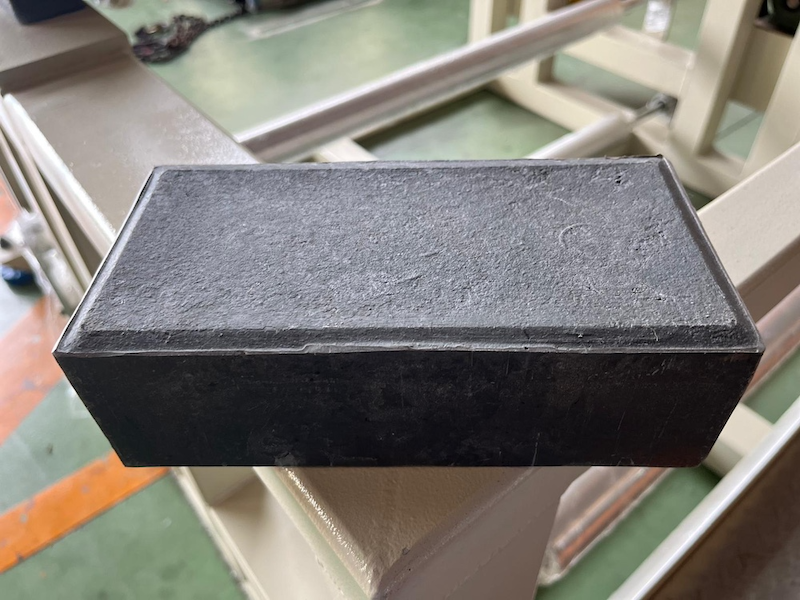
EcoBrik & modular plant metrics
Indicative performance for a standard Samsara modular plant.
- ≈ 2.8–3.0 million EcoBrik units per year
- > 2,000 tonnes of mixed plastic diverted from landfill annually
- > 6,000 tonnes of CO₂e avoided each year
- EcoBrik ≈ 1.55 kg - about 50% lighter than concrete
- Up to 929 units per pallet vs ~480 concrete bricks
OUR MISSION IS CIRCULAR
About Samsara Materials
Samsara Materials develops clean, modular manufacturing technologies that transform mixed plastic waste into high-performance, cement-free building materials. Our mission is to reduce global landfill burden, eliminate waste incineration, and accelerate circular construction worldwide.
Clean-tech innovators
We design processes that eliminate cement, minimize carbon emissions, and turn hard-to-recycle plastic into high-strength engineered composite materials.
Modular manufacturing leaders
Our modular plant architecture enables cities, waste operators, and investors to deploy circular manufacturing capacity rapidly and close to waste sources.
Climate-aligned builders
We work at the intersection of infrastructure and climate action, providing materials that meet performance standards while achieving measurable environmental impact.
Our Story
Samsara Materials was founded to solve one of the world's toughest environmental challenges: how to recycle mixed, dirty, low-value plastics at scale. Traditional recycling systems are built for clean, sorted plastic streams - a tiny fraction of global waste. The majority of plastics, especially flexible films and contaminated mixed packaging, is landfilled or incinerated because mechanical recycling cannot process them cost-effectively.
Samsara developed the Green Upcycling Process (GUP) to change that. GUP converts unsorted, unwashed, contaminated plastic waste into a thermally stabilized composite that meets construction-grade performance. This breakthrough makes circular manufacturing possible anywhere plastic waste is collected.
Our Core Values
Impact First
Everything we build must meaningfully reduce emissions, waste, or environmental harm in measurable, scalable ways.
Engineering Excellence
We apply rigorous materials science, process engineering, and quality control standards to every product and manufacturing module.
Practical Circularity
Our technologies are designed not just to be innovative - but to be deployable, affordable, and commercially viable.
The Plastic Waste Challenge
Since the 1950s, only a small fraction of global plastic has ever been recycled. Most ends up in landfills, incinerators, or the environment.
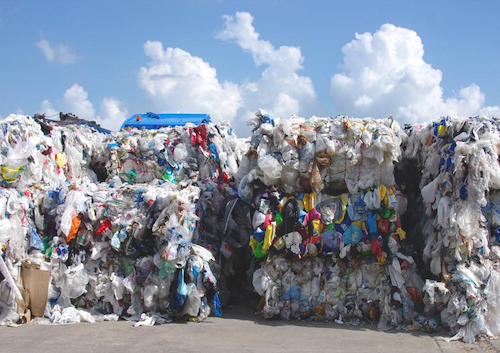
Landfills filling fast
Billions of tonnes of plastic take centuries to break down while creating leachate and municipal liability.
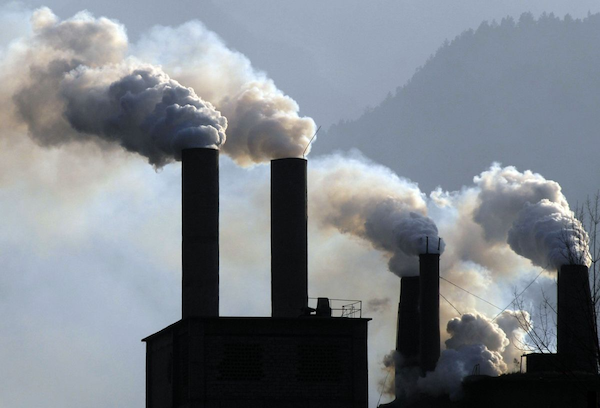
Incineration is not the answer
Waste-to-energy reduces volume but releases greenhouse gases and fails to create reusable construction materials.
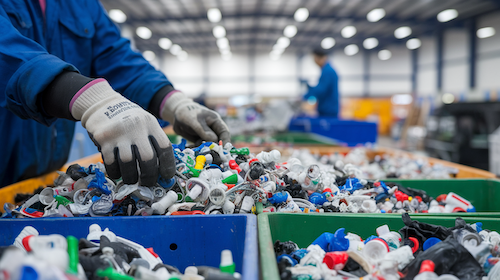
Current recycling is inefficient
Mechanical recycling rates reach only ~11% in regions like BC, showing the need for scalable green upcycling.
A Circular Solution That Works
Mixed feedstock
GUP accepts unwashed films and rigid packaging without sorting or washing.
CO₂ reduction
Removes cement, reduces transport emissions via lighter bricks, and avoids incineration releases.
ESG alignment
Supports municipal diversion targets and environmental stewardship mandates for investors.
CEMENT-FREE. HIGH STRENGTH. SUSTAINABLE.
EcoBrik — A Next Generation Composite Brick
EcoBrik is a high-strength composite brick made from mixed plastic waste and mineral fillers. It outperforms concrete in compressive strength and durability — all without using cement or water in manufacturing.
Technical Features
Cement-free composition
No Portland cement, no water used in production - dramatically reducing embodied carbon.
High compressive strength
Verified by independent labs to exceed the requirements for high-density concrete bricks, reaching over 48 MPa.
Low water absorption
Extremely low water uptake (0.2%–0.4%) under cold and boiling tests; ideal for wet environments.
Freeze–thaw durable
Withstands repeated cycles without cracking - ideal for cold and high-moisture climates.
Lightweight Efficiency
Approximately 45% lighter than concrete bricks, reducing transport costs and worker fatigue.
Safe and clean
Negligible toxic gas emissions and extremely low leachate (0.0017%) under controlled testing.
Performance & Test Results
| Property | EcoBrik | Concrete Brick |
|---|---|---|
| Weight | 1.55 kg | 3.0 kg |
| Compressive Strength | > 48 MPa | 18–20 MPa |
| Water Absorption | 0.2%–0.4% | ~8% |
| Tensile Strength | 34.5 MPa | 3.28 MPa |
| Leachate Release | 0.0017% | Not available |
| Flame Spread | Low / minimal | Varies |
Applications
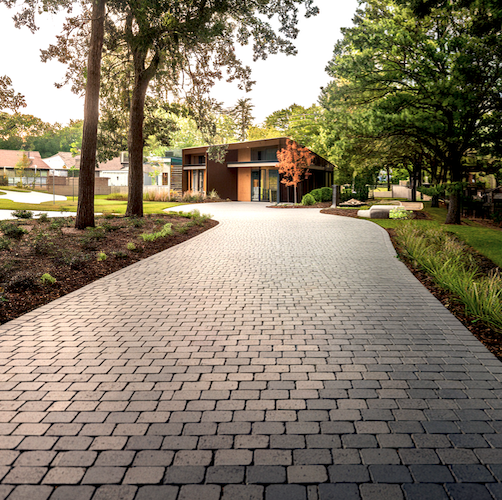
Paving
Driveways, walkways, courtyards, patios, and pedestrian paths. Lighter weight enables 45% faster placement and easier handling.
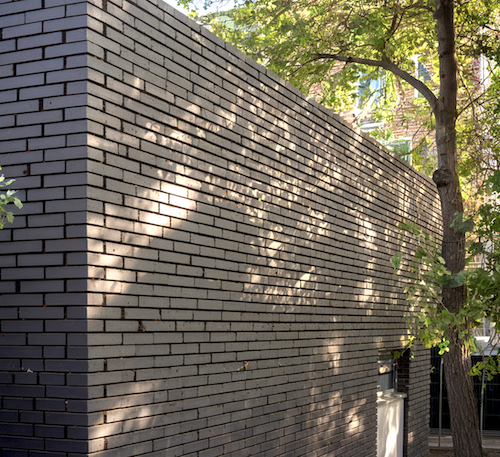
Cladding
Exterior or interior facade systems with greater thermal insulation and moisture resistance than conventional concrete bricks.
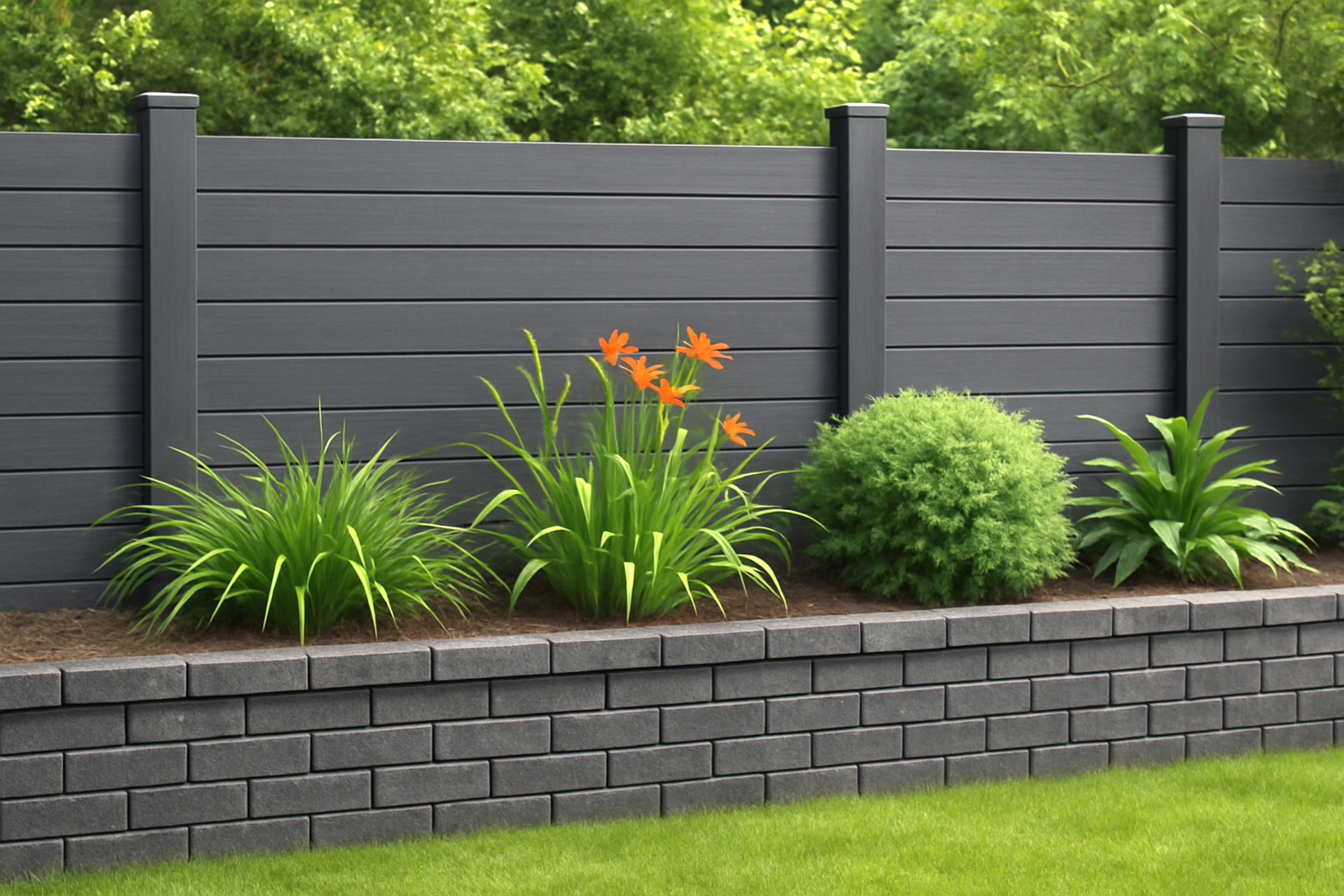
Landscaping
Garden edging, retaining structures, and partitions designed for landscape architects seeking weather-resistant materials.
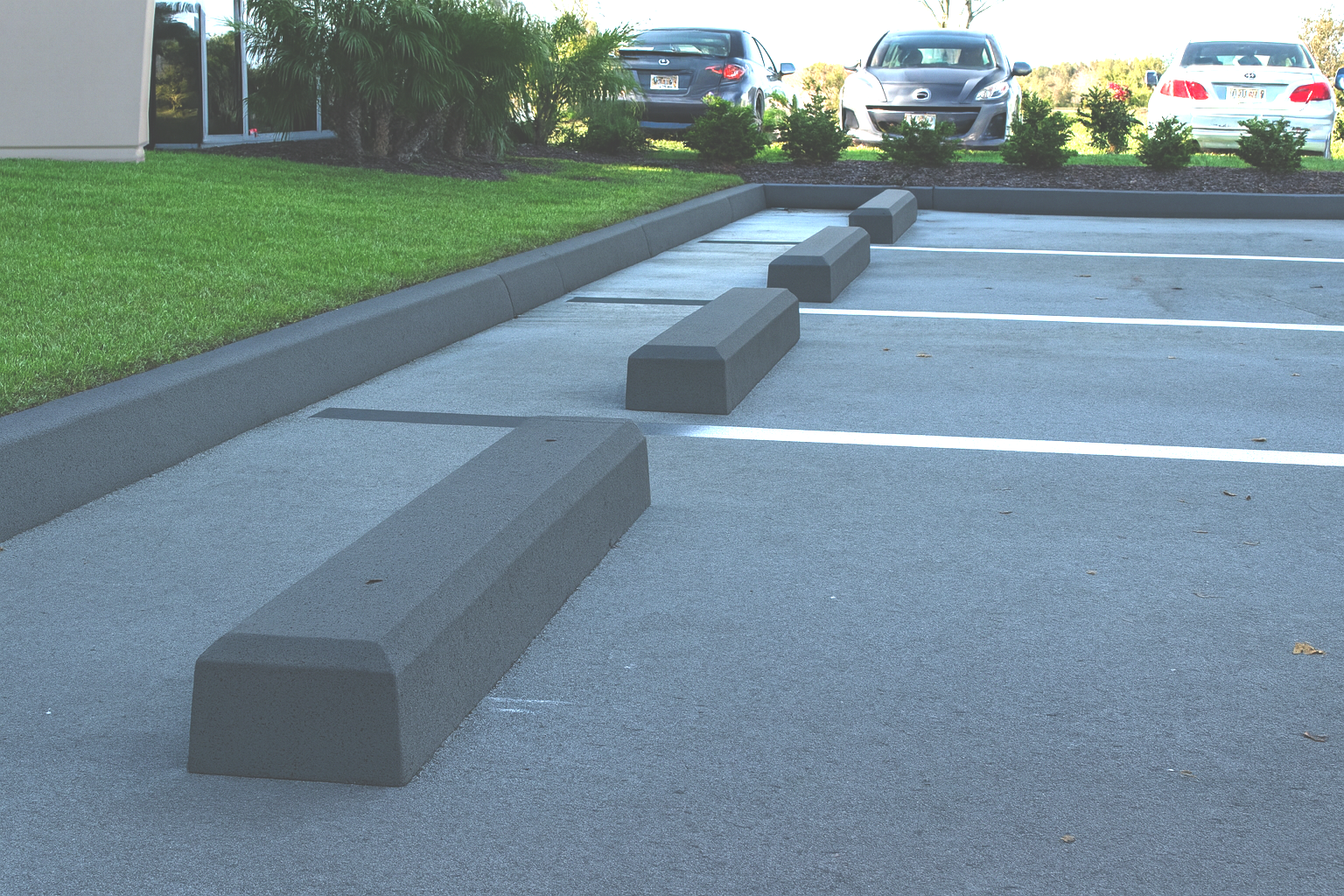
Parking stops & road barriers
High-impact curb edges and road barriers engineered for municipal, commercial, and industrial use.
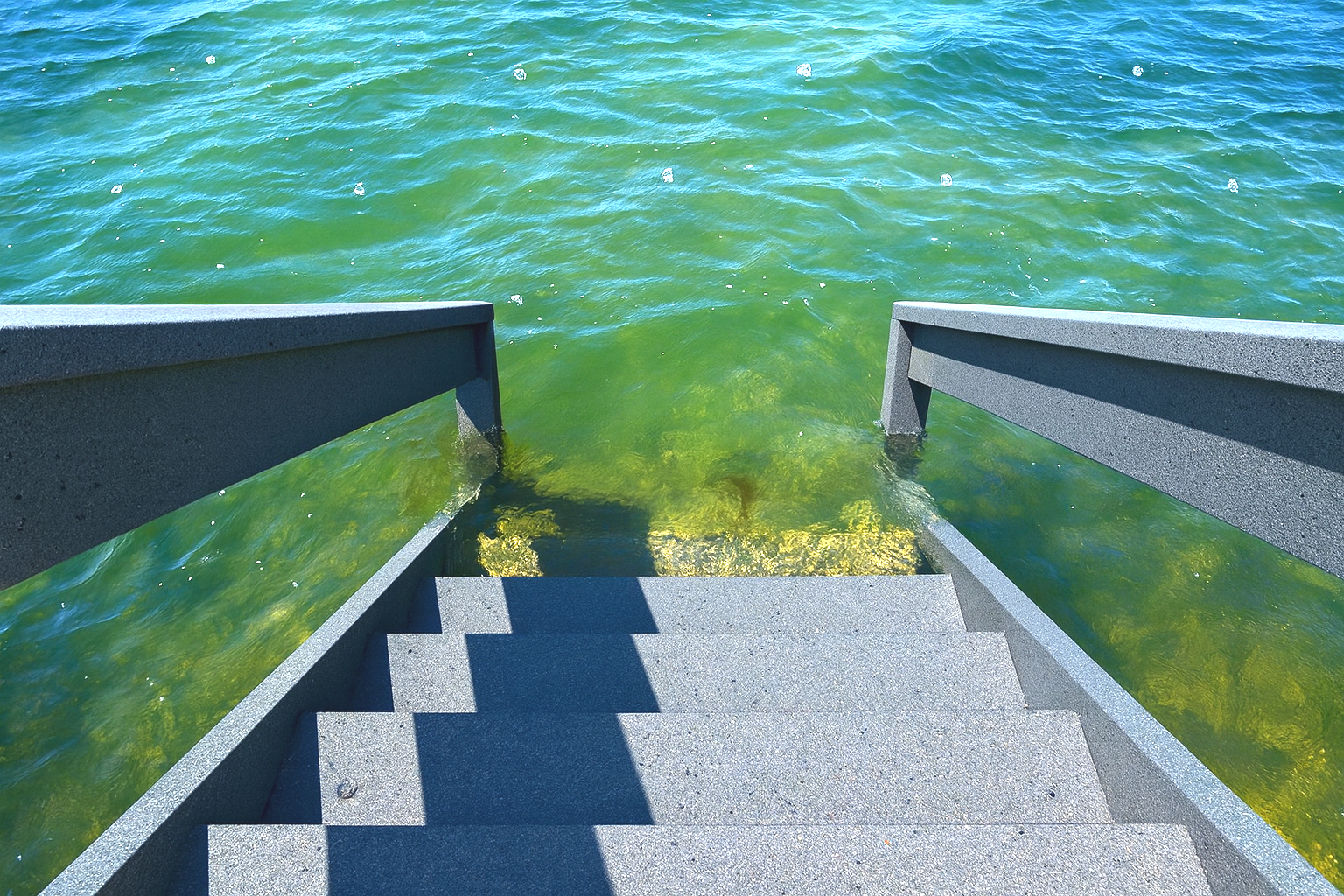
Stairs
Non-slip, moisture-resistant stair modules for parks and waterfronts; performs reliably in wet and tidal conditions.
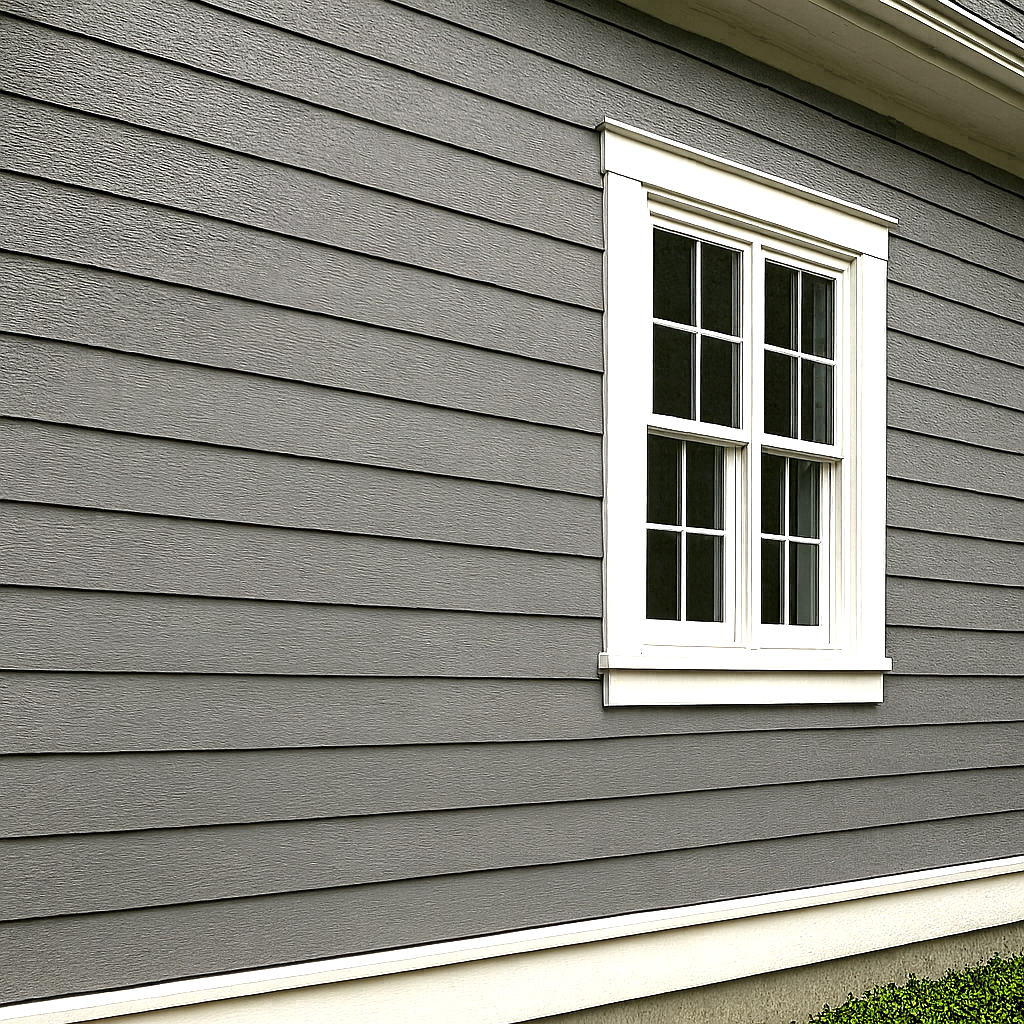
Custom profiles
Future boards, roofing panels, and structural composite architectural profiles for flexible construction.
Installation & Handling
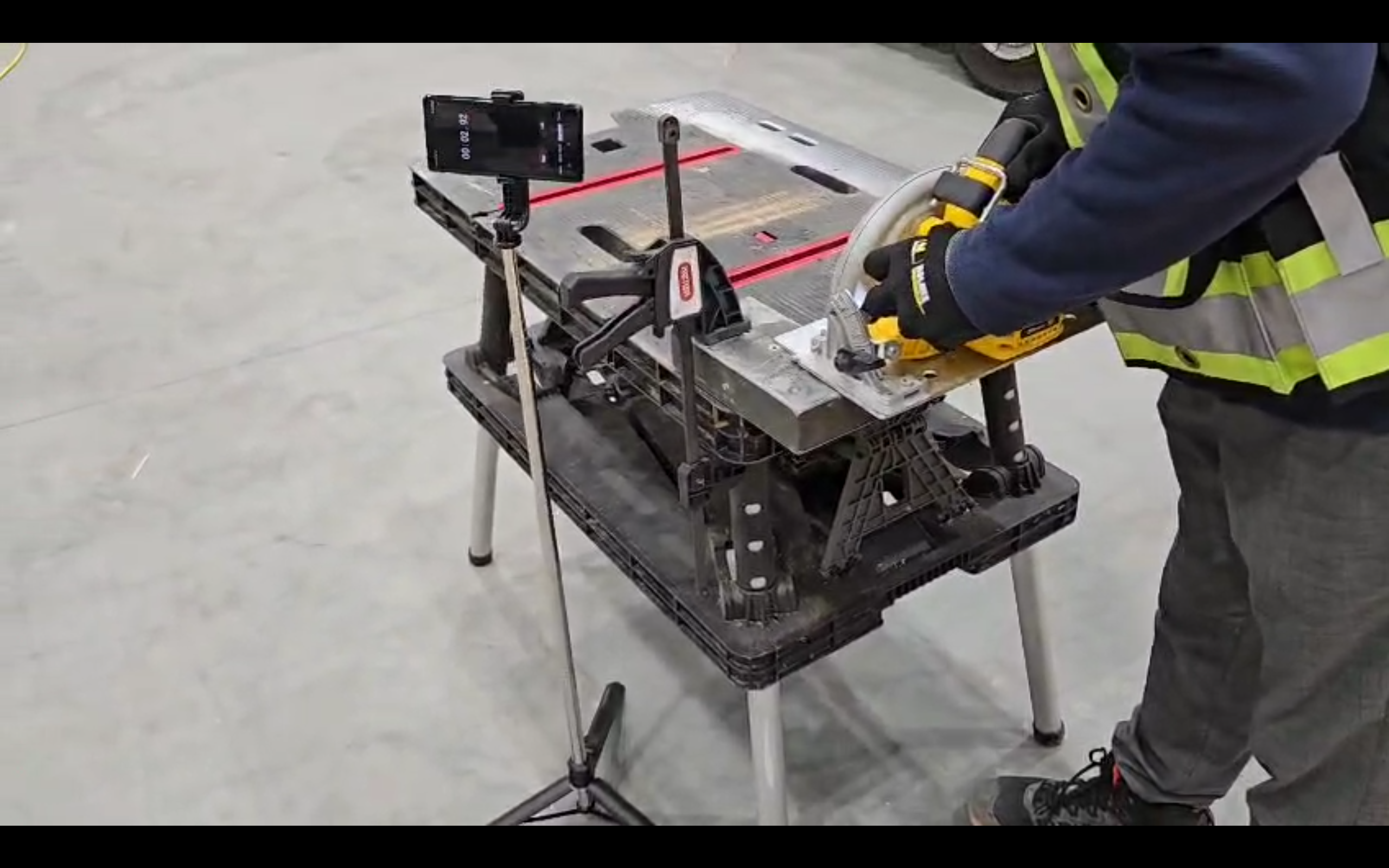
Cutting
Cuts smoothly using standard masonry or circular saws.
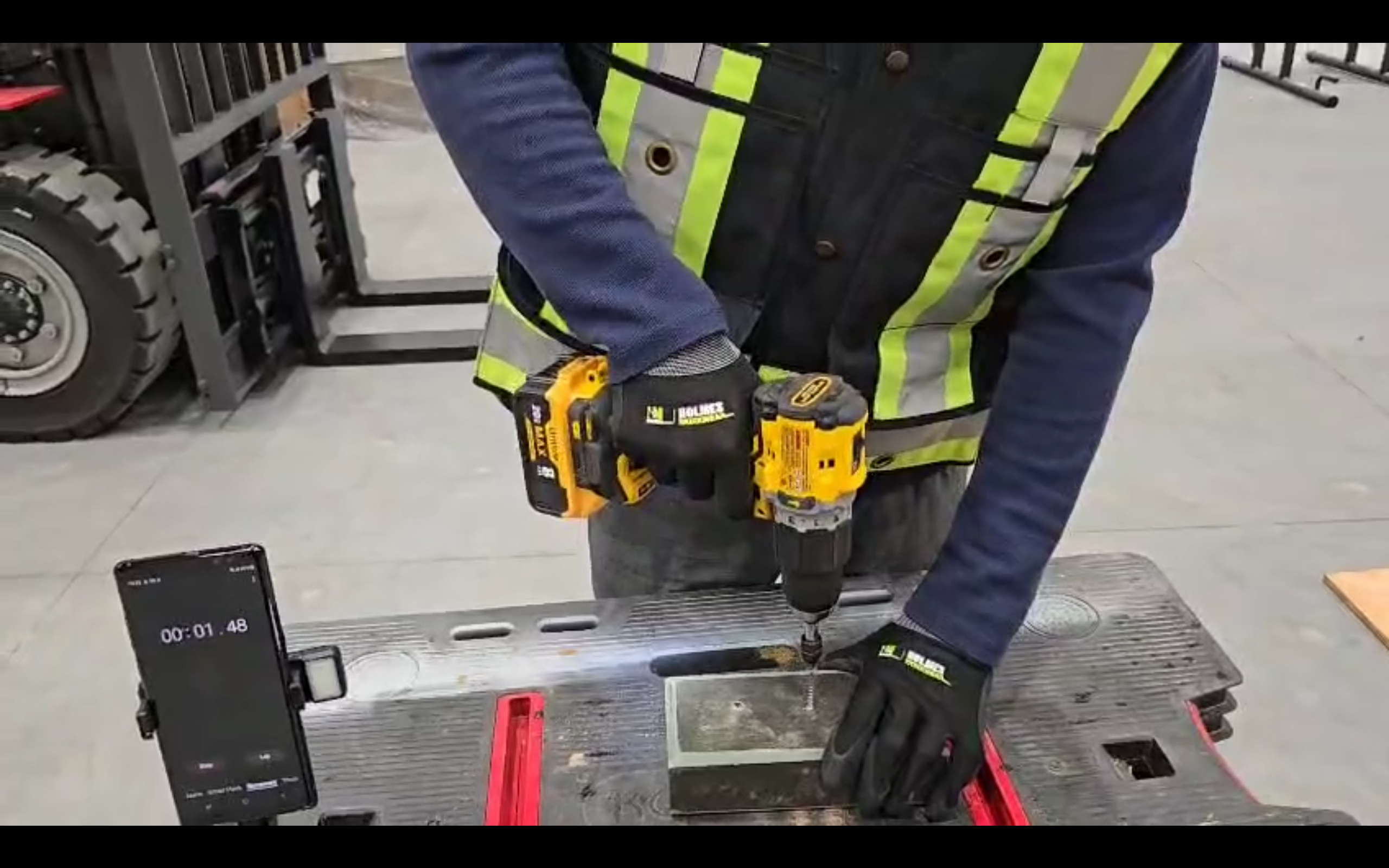
Drilling
Accepts screws, anchors, and bolts using common drills - no special tools needed.
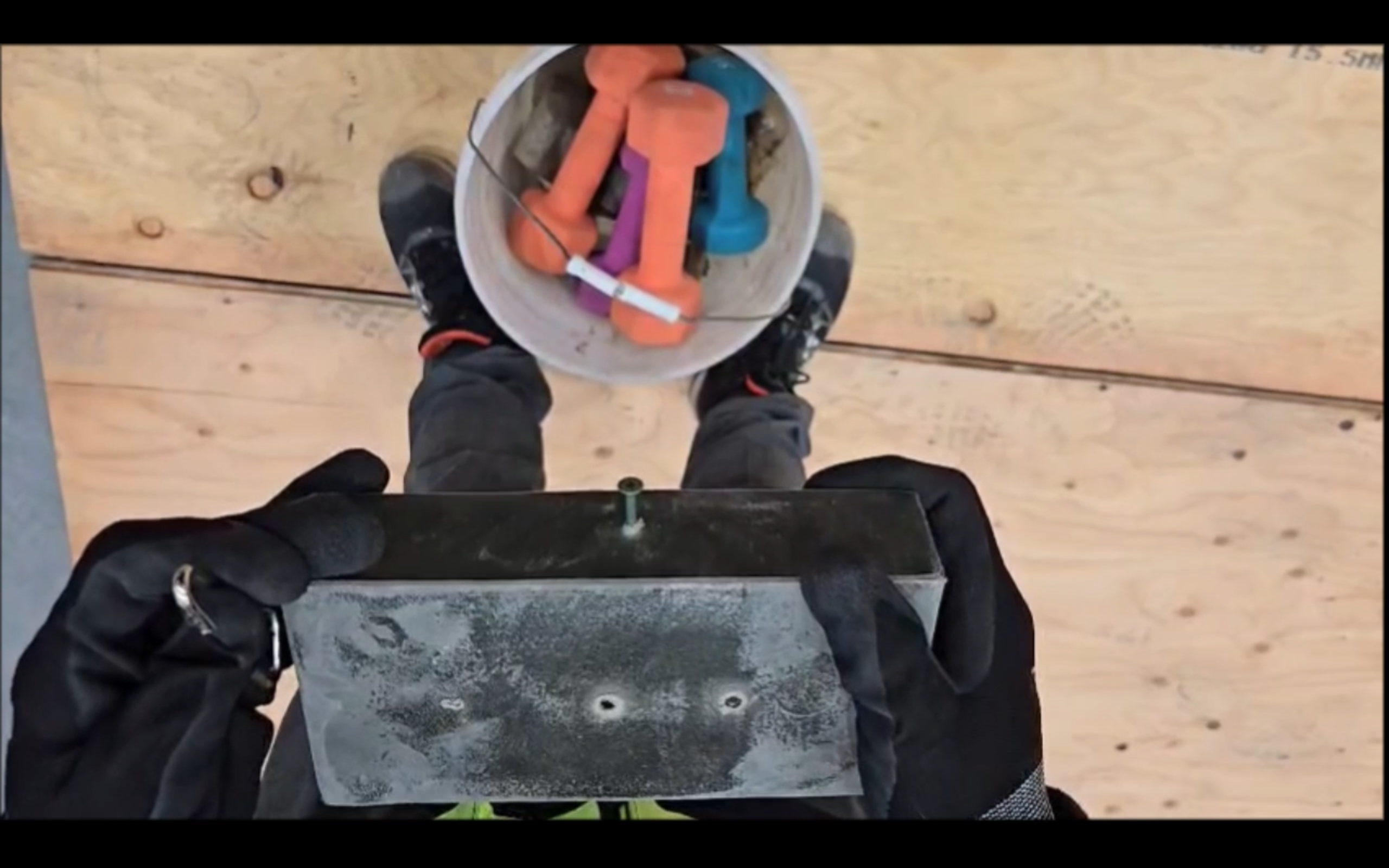
Handling
Lightweight units (1.55 kg) reduce worker fatigue and allow faster placement.
CLEAN, SCALABLE, CIRCULAR
Samsara’s Green Upcycling Process (GUP)
A clean thermal–mechanical transformation system converting mixed plastic into high-strength building materials. No incineration. No washing. No sorting. Minimal emissions.
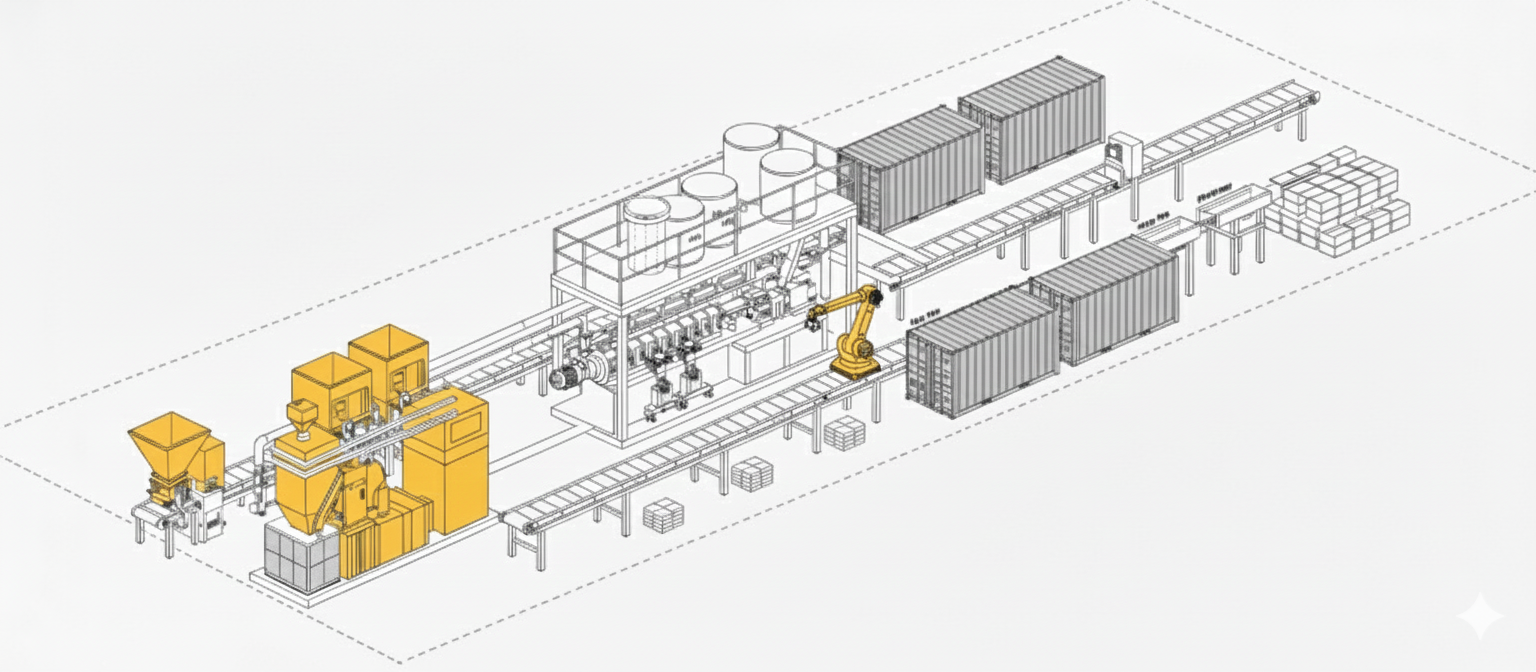
1. Mixed Waste Input
Accepts films, rigid plastics, agricultural and marine waste without sorting or washing.
2. Pelletizing
Feedstock is shredded and homogenized into consistent Plastic Waste Mixture (PWM).
3. Multi-Screw Compounding
PWM is combined with mineral fillers using controlled mixing safely below thresholds.
4. Composite Formation
Extruded through a forming module into uniform EcoBrik units.
5. Cooling & Finishing
Matrix is stabilized and trimmed for final packaging and shipment.
6. QC & Certification
Verification for ASTM/CSA strength standards ensuring consistent performance.
Why GUP Is a Breakthrough
No sorting or washing
Eliminates pre-processing by accepting contaminated streams including labels directly.
No incineration
Avoids harmful dioxins and gases via controlled thermal processing.
Dry process
Uses 0 ml water, unlike traditional wet recycling methods.
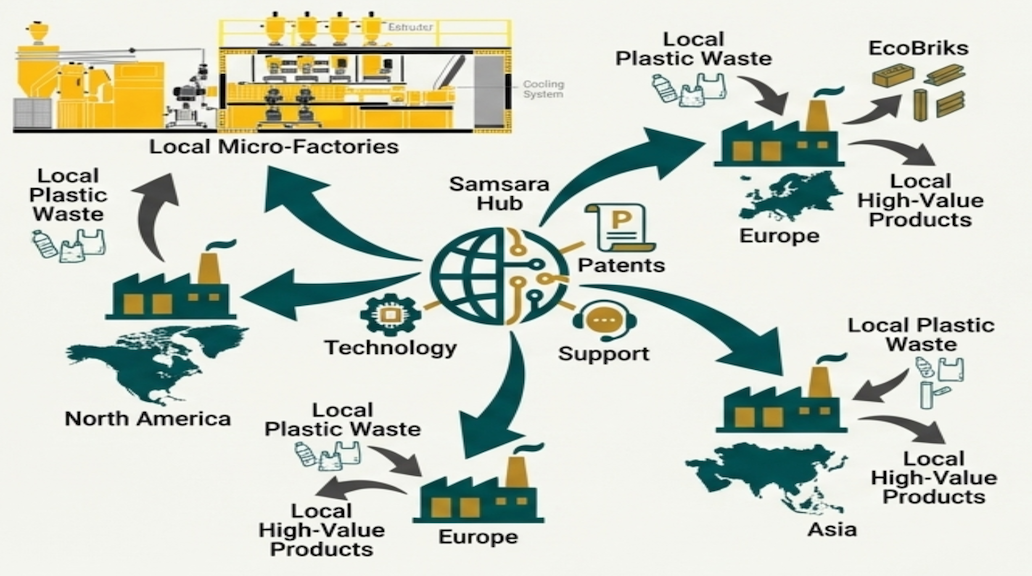
Modular Plants for Local Circular Economies
Deploy EcoBrik manufacturing where plastic waste is collected and construction demand is growing.
Samsara’s modular plants convert mixed, unwashed, and contaminated plastic waste into high-strength EcoBrik building materials. Deploy manufacturing close to the waste source — enabling real circular economies.
- Distributed deployment: Located at MRFs or landfills — minimizing hauling.
- Fast to set up: Prefabricated units reduce engineering time and enable fast market entry.
- Modest CAPEX: Designed for capital efficiency and multi-site regional rollout.
EcoBrik Impact Metrics (Year 2025 – Prototyping)
Plastic Recycled
1,125 kg
CO₂e Avoided
74 kg
Bricks Produced
450 units
Note: Baseline stage (2025). From 2026, impact scales with modular plants reaching 10x plants by 2030.
Team
Frank Pho, BS, CPA — CEO
Frank has more than 35 years of experience across venture capital, operational leadership, and advisory roles with technology start-ups. He has served on the Canada–China Cleantech Joint Working Group, representing Canada in advancing collaboration between the two countries. As a VC, he has backed multiple successful companies, including an exit of more than eleven-times return, and as an operator he has led several multi-million-dollar businesses through successful turnarounds. Frank is a Chartered Accountant and holds a B.Com. and Diploma of Accountancy from Concordia University.
Alexis Liu, MS, MA — COO & VP R&D
Alexis brings over three decades of executive experience in high-tech enterprises in Canada and Asia, with deep expertise in ESG-driven projects including Energy-as-a-Service models, hybrid microgrid systems, net-zero building material solutions, and smart agriculture. He earned a B.Sc. in Bio-environmental Systems Engineering from National Taiwan University and an M.Sc. in Computer Engineering from the University of Massachusetts, and later attended the Ph.D. program in Neural Science at Boston University.
Enzo Casal, MBA — Senior Manager, Operations
Enzo has more than five years of direct experience in the waste and recycling sector and also runs his own consultancy serving clients such as Recycle BC, CleanFarms, Lichens Recyclabilité, Circular Materials in Ontario, and Éco Entreprises Québec. He previously supervised three transfer stations in Metro Vancouver, coordinating multiple material streams, and currently oversees agricultural plastics collection pilots in Northern BC. Enzo holds an Honours B.Sc. in Biology and an MBA from the University of British Columbia.
Byron Chen, BS, P.Eng — Senior Manager, Sales & Marketing
Byron has over 20 years of experience in commercial and infrastructure construction project management. He is deeply familiar with building-materials markets, contractor and subcontractor coordination, and specification-driven sales. His background spans bidding, procurement, and site delivery on large projects, giving him a practical understanding of how new products such as EcoBrik can be positioned, approved, and adopted by developers, architects, and contractors.
Strategic Advisors
Lisa Bate, ICD.D, FRAIC, LEED AP BD+C
Lisa is an internationally recognized sustainability executive, board-certified director, and architect with extensive experience in ESG issues. She has held board-chair roles at CarbonCure, the World Green Building Council, and the Canada Green Building Council. Lisa is a leading voice on high-performance, sustainable design, with deep knowledge of net-zero-carbon design and cleantech solutions worldwide.
Tony Bi, Ph.D.
Professor Tony Bi is Director of the Clean Energy Research Center and a professor in the Department of Chemical and Biological Engineering at the University of British Columbia. He is a Fellow of the Canadian Academy of Engineering and specializes in clean-energy and thermochemical processes, holding a portfolio of patents across North America.
Sarah Gray, P.Eng., CAHP
Sarah is a Principal and Senior Building Science Specialist at RDH Building Science Inc. She has nearly 25 years of experience in engineering and building science, with a focus on heritage building rehabilitation, assessments of existing buildings, deep energy retrofits, and enclosure consulting.
Kirthi Roberts, Ph.D., P.Eng.
Kirthi has around 25 years of experience across five major industry sectors in Canada, with a career centred on environmental management and climate-action strategy. He has served as Director of Environment at Vancouver Airport Authority and holds a doctorate in Resource Management and Environmental Studies.
Iain Mant, LL.B.
Iain is a partner at Fasken Martineau DuMoulin LLP and a corporate lawyer with more than 30 years of experience. He advises companies and investors on a broad range of transactions, including mergers and acquisitions, financings, and complex cross-border deals.
Partners
Recycle BC
The not-for-profit responsible for residential packaging recycling in BC. Provides access to waste-plastic streams and connects Samsara with municipal partners in the recycling ecosystem, crucial for enabling circular solutions for flexible plastics.

Powertech Labs
One of North America’s most advanced testing organizations (BC Hydro subsidiary). Powertech designs and conducts emissions-testing programs ensuring Samsara's processes comply with rigorous industry standards.
SGS Taiwan
Global leader in inspection, verification, testing, and certification. The SGS Taiwan team has worked closely with Samsara to design comprehensive testing protocols and carry out detailed strength testing on prototypes.

OEM Partners in Asia
Industrial leaders collaborating on the co-development of manufacturing processes and equipment. Expertise in advanced production techniques helped refine and optimize the green manufacturing system.
MaRS Discovery District
Founded in 2000 and now a leading innovation hub, MaRS supports Samsara with resources for research, commercialization, and sustainable growth, connecting us with experts in cleantech and circular-economy initiatives.
IFEZ South Korea
IFEZ is South Korea’s premier global business hub. It recently issued a Letter of Intent supporting Samsara’s initiative, reinforcing its strategic leadership in high-tech sustainability and the global circular economy.
Technical Resources & Documentation
Use these documents to evaluate performance and support compliance processes.
EcoBrik Product Datasheet
Key physical properties, dimensions, weight, and performance metrics.
Download PDFInstallation Manual
Handling instructions, cutting, and drilling guidelines for site use.
Download PDFCO2 Avoidance Analysis
Technical brief detailing the carbon avoidance metrics for EcoBrik.
Download PDFFrequently Asked Questions
What is EcoBrik made from?
Mixed plastic waste (flexible films and rigid packaging) and mineral aggregates. No cement or water.
How strong is EcoBrik compared to concrete bricks?
Compressive strength (reaching over 48 MPa) exceeds that of high-density concrete bricks used in paving and cladding.
Does EcoBrik absorb water or crack in freeze–thaw conditions?
Low absorption (0.2–0.4%) and strong resistance to freeze-thaw cycles; suitable for wet climates.
Is EcoBrik safe for the environment?
Yes. Cement-free, low energy, and leachate release of only 0.0017%. Designed to encapsulate plastic safely.
How is it installed?
Same methods and tools as concrete brickwork. Standard masonry saws and drills used.
Can EcoBrik be used in load-bearing walls?
Intended for paving, cladding, landscaping, and fencing. Structural use requires engineering approval.
What types of plastic waste can Samsara accept?
Mixed unwashed films, multilayer packaging, agricultural plastics, and marine-recovered waste.
What new products are planned?
Fascia boards, roofing panels, siding boards, structural posts, and fencing systems.
How do modular plants integrate into existing waste systems?
Co-located at MRFs, transfer stations, or landfills; accept sorted fractions directly.
Where is EcoBrik currently being tested or deployed?
Tested in certified independent labs and piloted in selected demonstration paving sites.
How can I get technical support or project-specific advice?
Reach out via the Contact form for designers, engineers, and regulators.